THE METROPOLITAN CAST
A Historical Waterborne Casting Method for Modern ConditionsBy Mark Severino
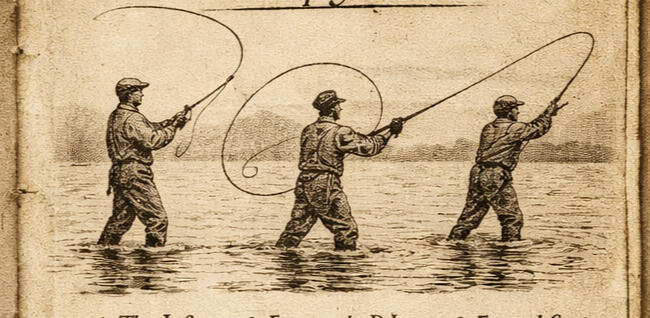
The Metropolitan CastHow Nineteenth-Century River Craft Solves Today’s Tightest Casting EnvironmentsLong before shooting heads and wide aerial D-loops dominated two-handed fly fishing, nineteenth-century anglers on the tree-lined rivers of Wales and Great Britain solved a timeless problem: how to cast a long line with zero room behind them.Rather than attempting a strict historical reconstruction, this series explores how those nineteenth-century principles can be interpreted and applied using contemporary tackle and today’s fisheries.
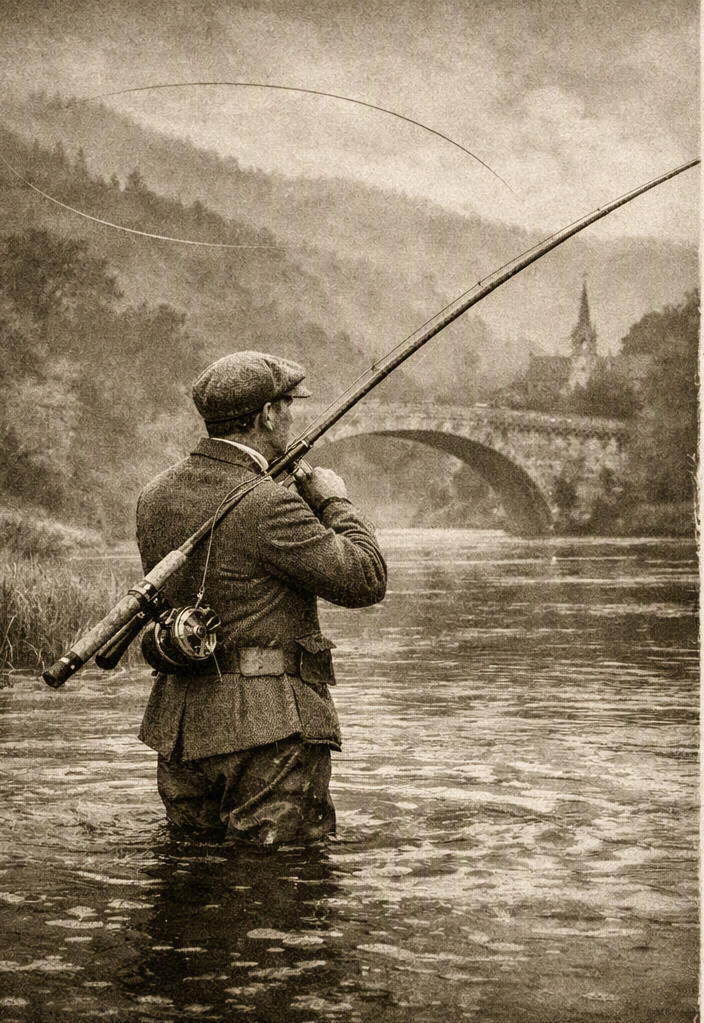
Metropolitan Cast: IntroductionThe Metropolitan Cast, historically associated with the Metropolitan Straight Cast described in nineteenth-century fly-fishing literature, is a Welsh Throw-derived waterborne casting method that remains relevant to modern anglers.Field observations suggest it is far more than that.The Metropolitan Cast is a complete waterborne casting method that produces practical long-range fishing casts while operating with an exceptionally compact casting footprint. By relying on continuous water contact, incremental geometry correction, and compressed D-loop formation, the cast offers an alternative approach to line management that differs significantly from many modern two-handed casting systems.What Is the Metropolitan Cast?
The Metropolitan Cast is a complete casting method built around progressive waterborne repositioning. Rather than solving line alignment and casting geometry through a single large movement, the line is gradually moved into position through a sequence of smaller corrections.The Progressive Workflow
• Poor Geometry
• Waterborne Roll-Out Reset #1
• Improved Geometry
• Waterborne Roll-Out Reset #2
• Improved Geometry
• Final Castable Geometry
• Final Delivery CastThe method's defining characteristic is that the line remains connected to the water throughout the repositioning process.The Waterborne Roll-Out Reset
The Metropolitan reset closely resembles the opening phase of a Roll Cast. Beginning from the dangle, the casting sequence follows a precise path:
• Vertical Lift
• Rod Blank Alongside Shoulder
• Line Rolls Across Water
• New PositionOn the casting-shoulder side, the line rolls across the water surface. On the non-casting-shoulder side, the movement becomes a mirrored reverse rollout. In both cases, the line remains connected to the water.The goal is not immediate delivery. The goal is controlled repositioning.
Each rollout:
• Preserves anchor engagement
• Maintains water resistance
• Helps maintain useful line tension
• Improves geometry
• Progressively reorients the casting laneThe line is never picked up and moved through the air. It is rolled into position across the water surface.Walking the Line Into Position
A useful way to visualize the Metropolitan Cast is as a process of "walking" the line into position.
Starting from a dangle:
• Lift
• Roll Out
• Improved Position
• Lift
• Roll Out
• Improved Position
• Lift
• Roll Out
• Final PositionEach movement improves:
• Anchor alignment
• Line alignment
• Tracking direction
• Casting geometry
until a castable condition is achieved.This progressive approach contrasts with systems that seek immediate correction through one larger movement.Rotational Repositioning
One of the most interesting aspects of the Metropolitan Cast is its ability to rotate the casting system progressively. Each reset can change line direction in small increments.
Example:
• 0°
• 45°
• 90°A line positioned entirely on one side of the caster can be rotated toward the desired casting lane through successive roll-out resets.The process is achieved through:
• Line Dangle
• Vertical Lift
• Rod/Hands Alongside Shoulder
• Torso Rotation
• Roll-Out Across Water
• New PositionRepeated corrections can continue rotating the line:
• 0°
• 45°
• 90°
• 135°
• 180°
• 225°
• 270°
• 315°
• 360°In theory, the same reset concept can reposition the anchor and casting lane through virtually any angle surrounding the caster.
Viewed this way, the Metropolitan Cast becomes more than a single cast. It becomes a complete rotational line-management system that culminates in a cast.Water Resistance and Continuous Tension
A defining characteristic of the Metropolitan Cast is continuous engagement with the water. Because the line remains connected to the water throughout repositioning, the system continually works against:
• Surface drag
• Anchor friction
• Water resistanceThe sequence becomes:
• Lift
• Roll-Out
• Resistance Maintained
• Lift
• Roll-Out
• Resistance Maintained
• CastThe Metropolitan Cast appears capable of maintaining useful line tension throughout much of the correction process. This creates a very different casting rhythm from many conventional two-handed casting methods.The Compressed D-Loop
Perhaps the most surprising feature of the Metropolitan Cast is its D-loop geometry.
The cast operates with:
• An extremely narrow D-loop
• Minimal rearward expansion
• Highly vertical geometry
• A compact casting footprintThe D-loop often remains directly adjacent to the casting shoulder.
Conventional wisdom often links greater distance to larger D-loops. Field observations challenge that assumption.Testing produced casts exceeding 100+ feet while using a dramatically compressed D-loop. The implication is significant.
Efficient:
• Geometry
• Alignment
• Tracking
• Anchor control
• Tension management
may contribute as much to fishing distance as D-loop size itself.Timing Differences
Traditional casting systems often follow a rhythm such as:
• Sweep
• Wait
• D-Loop Forms
• Forward CastThe Metropolitan Cast appears to compress this sequence.
Instead:
• Roll-Out Reset
• Roll-Out Reset
• Lift Apex
• Immediate DeliveryBecause the D-loop remains narrow and compact, it requires little time to expand rearward. The transition from setup to delivery can occur almost immediately after the final repositioning movement.Tracking and Precision
The Metropolitan Cast rewards precise tracking. Large D-loops can occasionally hide small tracking errors. Compressed D-loops cannot.Successful delivery depends upon:
• Strict adherence to the 180-degree rule
• Accurate anchor placement
• Consistent tracking
• Proper casting-lane alignmentAs D-loop size decreases, precision becomes increasingly important.Practical AdvantagesConfined Spaces
The compact D-loop allows effective casting where larger systems may be restricted.Wind Resistance
Most repositioning occurs close to the water surface, reducing wind exposure.Line Control
Progressive waterborne roll-out resets provide exceptional anchor and line management.Teaching Tool
The cast makes geometry correction highly visible and easy to study.Versatility
The system can be applied in:
• Surf
• Rivers
• Estuaries
• Lakes
• Confined banks
• Obstacle-limited environmentsQuick Comparison: Spey Cast vs. The Metropolitan Cast
Both systems pursue the same goals:
• Tension
• Alignment
• Anchor organization
• Castable geometryModern Spey Cast
• Poor Geometry
• Single Large Reset
• Final Geometry
• CastMetropolitan Cast
• Poor Geometry
• Waterborne Roll-Out Reset
• Improved Geometry
• Waterborne Roll-Out Reset
• Improved Geometry
• Final Geometry
• CastBoth methods can arrive at a similar final casting condition. The distinction lies in the path they take to get there. Modern Surf Spey favors larger corrections. The Metropolitan Cast favors incremental roll-out corrections.Historical Significance
The Metropolitan Cast possesses significance beyond practical fishing performance. Even when multiple resets are not strictly necessary, casting a historical concept that remains effective today has value.The cast preserves an alternative casting philosophy:
Move the line progressively into position rather than correcting everything at once.In many respects, the Metropolitan Cast preserves a process-oriented approach to fly casting in which line positioning is considered just as important as the final delivery.This approach appears consistent with many historical descriptions associated with:
• Welsh Throw
• Switching
• Bringing the line round
• Turning the lineWhether viewed as an extension of Welsh Throw principles or as a unique waterborne casting system in its own right, the Metropolitan Cast provides a rare opportunity to experience a casting philosophy that predates many modern two-handed casting methods.Conclusion
The Metropolitan Cast should be regarded not merely as a repositioning technique, but as a complete casting method built around waterborne geometry correction, continuous tension, compressed D-loop delivery, and efficient line organization.Field observations suggest that practical long-range fishing casts can be achieved from a remarkably compact casting geometry, challenging assumptions about the need for large D-loops and expansive rearward casting space.Its compact footprint may prove advantageous in environments where obstacles, vegetation, high banks, wind, or restricted backcasting room limit larger casting systems.Perhaps equally important is its historical significance. Even when a single larger reset can accomplish the same objective more quickly, the Metropolitan Cast lets modern anglers fish and experience a living historical concept. It preserves an older way of thinking about line management, anchor control, and geometry correction while remaining a practical and enjoyable casting method in modern conditions.

Metropolitan Cast: Torso Alignment, Rod Mechanics, and Anchor ControlHow Ground-Up Stance Indexing, the Chest-Shoulder Seam, and Water-Loaded Rod Action Control Compressed D-Loop GeometryIntroduction
In The Metropolitan Cast, we examined how progressive waterborne rollouts and compressed D-loop geometry produce long-range casts within a tight footprint. Because a compressed D-loop operates directly adjacent to the body, arm-driven sweeping motions easily pull the rod off plane, collapse the D-loop, or rip the anchor off the water.In the Metropolitan Cast, water resistance and vertical rod mechanics do the physical work, while full-body indexing serves strictly to aim the track—orienting your alignment so the line and rod remain on a true 180-degree path.Coordinating a ground-up alignment chain—feet, knees, waist, torso, and the chest-shoulder seam—keeps every rollout on plane and aligns the final cast with the target lane.Key Terminology: What Is a Rollout?
In the Metropolitan Cast, a rollout is a controlled, low-power roll cast executed strictly to reposition the line across the water surface rather than to achieve fishing distance.Unlike an aerial backcast or wide sweep, a rollout keeps the line connected to the water, using surface tension, anchor friction, and compact vertical rod action to shift the line incrementally toward the target lane.Core Principle: Ground-Up Indexing, Not Driving the Cast
In conventional two-handed casting, anglers often rely on wide arm sweeps or rotational body torque to generate a large rear D-loop. In the Metropolitan Cast, the body does not power the cast. Instead, water resistance loads the rod, compact bottom-hand and top-hand inputs guide the blank, and your body acts solely as an aiming mechanism.The Ground-Up Alignment Chain: True torso indexing never happens by twisting the upper body alone.Every alignment adjustment starts from the ground up—feet, knees, waist, torso, and finally the chest-shoulder seam—stacking your entire frame squarely toward the next angle increment before you move the rod.Water-Loaded Rod Action: Continuous surface drag and anchor friction provide the counter-force that bends the rod. Small, vertical rod movements—lifting cleanly and applying a crisp, short stroke along the seam—transfer that waterborne tension into line movement.Quiet Upper Body: Because your feet, knees, waist, and torso index first and then lock into a balanced, athletic stance, your upper body stays completely quiet—keeping the rod blank on a vertical plane without twisting the anchor free or losing tension.The Chest-Shoulder Seam Reference
Because the Metropolitan Cast relies on a narrow, vertical D-loop rather than a wide rearward sweep, the caster needs an exact physical landmark to govern both the repositioning rollouts and the final forward delivery. The chest-shoulder seam—the vertical line where the front of the chest meets the casting shoulder—sits at the top of your ground-up alignment chain and serves as that reference plane.Aligning Each Rollout: Index your feet, knees, waist, torso, and chest-shoulder seam toward the next angle increment first. Once your frame is squared, lift the rod vertically along the seam until water tension engages, and execute a controlled rollout straight off that line.Defining the Compressed D-Loop Plane: On the final lift, pretension and vertical sweep into the casting lane, bring the rod vertically up alongside the chest-shoulder seam and stop there. That seam marks the rearward boundary of the compressed D-loop, keeping it compact, vertical, and ready for immediate delivery.Guiding the Final Forward Cast: Initiate the final forward stroke directly along that same chest-shoulder seam plane toward the target. Tracking straight off the seam prevents the casting hand from swinging across your chest ("coming over the top") and preserves strict 180-degree alignment from anchor to target.Indexing Through Progressive Rollouts
Each rollout shifts the line by an incremental angle - often 30 to 45 degrees at a time. Re-indexing your entire frame from the ground up before moving the rod prevents your waist and upper body from over-twisting as you "walk" the line around the clock.Ground-Up Frame Index (Feet → Knees → Waist → Torso → Seam): Beginning from the dangle, set your feet toward the next angle increment, align your knees and waist over your base, and square your torso and chest-shoulder seam directly toward the updated casting lane.Vertical Lift: With your stacked frame quiet and balanced, lift the rod vertically alongside the chest-shoulder seam until water tension engages the line.Water-Loaded Rollout: Execute a Roll Cast straight along the chest-shoulder seam, letting surface tension roll the line across the water into the new position.Anchor Lane Alignment and the 180-Degree Rule
Once your rollouts bring the line into the final casting lane, structural stability becomes critical for maintaining the 180-degree rule—the requirement that the anchor, D-loop, and forward target all share a single straight line.Setting the Anchor Lane: Complete your final ground-up index—feet, knees, waist, torso, and chest-shoulder seam—so the anchor sits directly in front of your seam, aligned straight toward the target.Stopping at the Seam: During your final lift pretension and vertical sweep into the compressed D-loop, stop your upward travel once the rod reaches the chest-shoulder seam. Letting the rod drift past that landmark pulls the D-loop behind your back.High-Apex Rod Delivery: Keeping the D-loop narrow and vertical off the chest-shoulder seam lets you transition immediately from the apex into your forward sequence —drift, slide, translation, and late rod rotation—while maintaining apex height to launch a tight loop with a high forward trajectory.Summary
In the Metropolitan Cast, water resistance and compact vertical rod mechanics generate the load, while full-body alignment acts strictly as an indexing guide. By re-indexing from the ground up—feet, knees, waist, torso, and chest-shoulder seam—before every reset, anchoring the rod plane to the seam, and using water-loaded rollouts to walk the line into position, the caster maintains continuous water tension and delivers crisp, high-velocity casts from a compact D-loop.
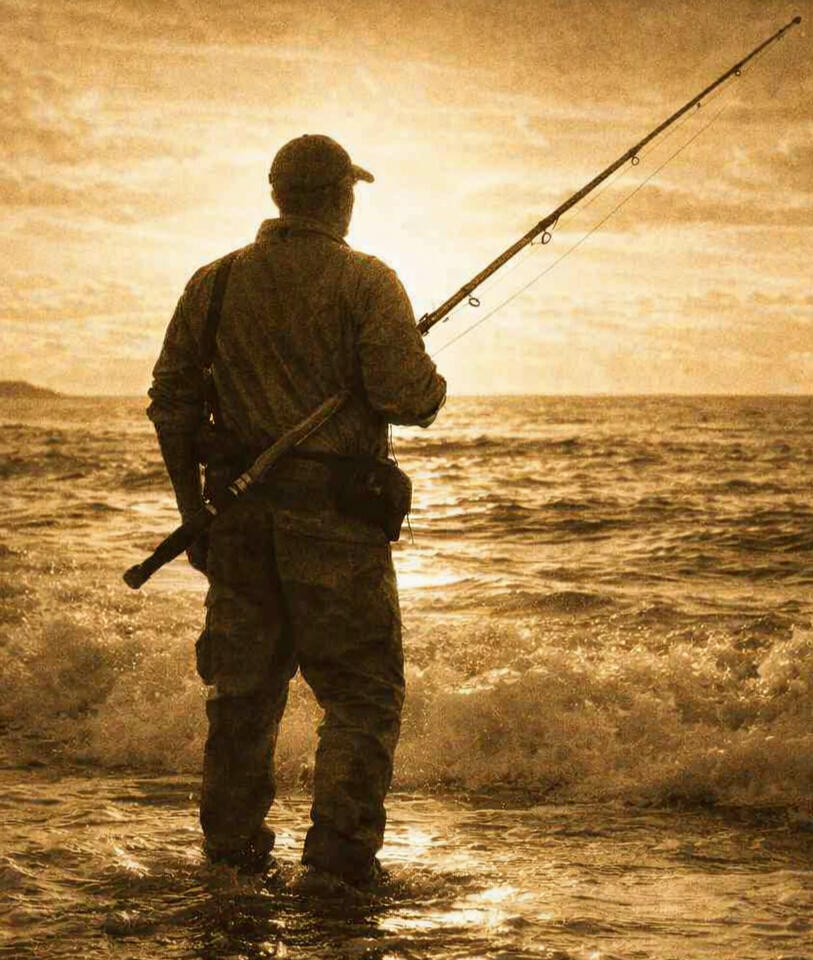
The Metropolitan Cast: Forward Stroke MechanicsHow a Compressed D-Loop Launches Through High-Apex Tracking, Drift, Slide, Translation, and RotationIntroduction
In the Metropolitan Cast, every waterborne roll-out is preparation.
Progressive roll-outs reposition the line, restore alignment, maintain anchor connection, and move the system into a castable condition. Once the final lift and vertical sweep establish the compressed D-loop, repositioning ends, and delivery begins.This article presents a working model for understanding the Metropolitan Cast forward stroke using modern equipment and modern casting terminology. Rather than focusing on large rearward loop development, the model explores how a compact D-loop, continuous water engagement, and precise rod tracking may contribute to efficient forward delivery.Where Does the Load Come From?
Conventional Spey-style casts often rely on the combined effects of:
• D-loop mass
• Line momentum
• Anchor resistance
• Rod deflectionThe Metropolitan Cast appears to distribute those forces differently.
During the Final Lift
• Slack is removed
• Water contact is maintained
• Tension begins to developDuring the Vertical Sweep
• The line pulls against the water anchor
• Resistance increases
• Rod deflection increasesField observations suggest that the Metropolitan Cast may place more of the casting load on rod deflection and line tension while relying less on extensive aerial D-loop development.Because the D-loop remains narrow and compact, the cast appears to require little prolonged rearward pause before delivery.The Metropolitan Forward Stroke
The Metropolitan forward stroke can be viewed as four connected phases:
• Drift
• Slide
• Translation
• Rotation
Rather than functioning as separate movements, they blend together into one continuous delivery sequence.1. Drift and Slide
Establishing the High-Apex Plane
In many casting systems, part of the forward stroke timing is dictated by the need to wait for a larger D-loop to develop rearward.
The Metropolitan Cast appears to reduce that requirement through its compressed geometry.As the vertical sweep reaches its apex:
Drift
• Allow a brief upward drift
• Maintain tension
• Preserve rod alignment
• Avoid introducing slack
The drift should remain minimal and continuous. It serves as a transition, not a pause.Slide
• Move the hands forward smoothly
• Stay on the apex plane
• Engage the forward track
• Preserve rod position
The slide establishes the path the remainder of the stroke will follow.
Keep the Body Quiet
During the drift and slide:
• The torso remains stable
• The shoulders remain quiet
• The hands perform the work
Excess body movement can pull the rod off plane and disturb anchor alignment.2. Translation
Building Maximum Load
Once the rod is moving along the forward path, translation carries the rod forward while maintaining the established apex height.
Translation should be:
• Smooth
• Straight
• Level
• Progressive
The objective is not sudden acceleration.The objective is to maintain tension while increasing load throughout the forward path.Think of translation as the runway leading toward launch.The drift and slide position the aircraft. Translation accelerates it down the runway. Rotation then releases the stored load into the forward loop.The rod continues to bend, the line remains connected, and the system approaches maximum loading before rotation begins.3. Rotation
Converting Load Into Line Speed
Rotation begins only after translation has moved the rod through most of its forward path.Late Rotation
A common error is rotating too early.
Early rotation may:
• Reduce tension
• Reduce rod load
• Collapse loop formationThe Metropolitan Cast appears to benefit from delaying rotation until the rod reaches maximum loading.Compact Rotation
At the end of translation:
• The bottom hand pulls
• The top hand guides
• The rod rotates crisply
The goal is not a large, sweeping movement.The goal is a short, efficient release of stored load into the line.Stay On Plane
Throughout rotation:
• Maintain the apex plane
• Avoid dropping the tip
• Keep the delivery track straight
Maintaining apex height helps produce a clean, efficient forward loop.4. The Finish
High Stop and Clean Turnover
The finish converts line speed into loop shape.A disciplined finish includes:
• A crisp stop
• Stable rod position
• Consistent apex height
• Controlled turnover
Keep the rod stop firm and high, allowing the loop to unroll cleanly toward the target.Dropping the rod tip prematurely may:
• Open the loop
• Reduce turnover efficiency
• Cause the cast to collapse
Maintaining rod position through the stop preserves loop stability and promotes clean presentation.The Metropolitan Forward Stroke Formula
A useful way to visualize the sequence is:
• Lift
• Pretension
• Vertical Sweep
• Drift
• Slide
• Translation
• Late Rotation
• High StopResult:
• Tight Loop
• Clean TurnoverThe exact balance will vary with:
• Rod design
• Line system
• Water conditions
• Casting styleField observations suggest that successful Metropolitan deliveries frequently share several common characteristics:
• Continuous tension
• Compact geometry
• High-apex tracking
• Progressive loading
• Late rotation
• Crisp stopping powerConclusion
The Metropolitan Cast forward stroke appears to derive much of its efficiency from precise tracking, compact geometry, and continuous tension rather than expansive D-loop formation.By combining:
• Water-assisted tension
• High-apex rod travel
• Drift
• Slide
• Translation
• Late rotation
the caster can deliver efficiently from an exceptionally compact casting structure.Whether viewed as a specialized adaptation of historical principles or simply as an alternative way to organize and deliver line, the Metropolitan forward stroke demonstrates that practical casting performance can be achieved without relying on large rearward casting geometry.
The Hybrid: Beyond the ResetApplying Historical Line-Setting Principles to Modern Distance CastingIntroduction
Throughout this series, we have examined how the Welsh Throw and Metropolitan Cast used progressive waterborne repositioning to solve casting problems long before modern two-handed casting systems existed.Rather than attempting a strict historical reconstruction, this article explores what happens when those historical line-setting principles are applied using contemporary tackle, modern fisheries, and modern casting objectives.The result is neither a traditional Metropolitan Cast nor a conventional modern Spey cast.The result is a practical hybrid system.Two Different Problems
Every long cast requires the angler to solve two separate problems.Problem One: Geometry
Before distance can be generated, the caster must establish:
• Alignment
• Tension
• Anchor control
• A usable casting lane
Poor geometry limits performance regardless of rod power or casting technique.Problem Two: Distance
Once geometry has been established, the caster must:
• Form an efficient D-loop
• Load the rod
• Generate line speed
• Deliver the castMany modern casting systems try to solve both problems at once.
The hybrid system treats them as separate tasks.Reposition First, Cast Second
One of the most useful lessons taken from the Metropolitan Cast is the value of repositioning before attempting the final cast.The line can be progressively improved before attempting any distance delivery.
Example:
• Lift and Roll
• Lift and Roll
• Line Straightened
• Geometry Restored
At this stage, distance is not the objective.The objective is preparation.
The line has been:
• Aligned
• Tensioned
• Organized
• Positioned for delivery
Only after these conditions exist does the distance cast begin.The Importance of a Straight-Line Reset
Not all resets produce the same result.
Field observations suggest that the most effective setups occur when the reset leaves the line straight, tensioned, and extended directly away from the caster before the sweep begins.The objective is not simply to move the line.
The objective is to create a direct relationship between:
• Caster
• Line
• Anchor
• Target laneWhen the line remains compressed near the caster, the sweep begins with a limited working path across the water.When the line is reset and stretched outward, the sweep engages the water over a much longer path.This extended setup appears to provide:
• Better alignment
• Greater tension
• Improved anchor organization
• More stable D-loop formationFor this reason, reset quality may matter more than the number of resets.The goal is not to perform multiple resets.
The goal is to position the line where the caster wants to cast: a straight, tensioned system before the final distance cast begins.The Metropolitan roll-cast reset naturally promotes this condition by progressively rolling the line outward until it lies straight, tensioned, and aligned in front of the caster before the sweep begins.The Hybrid Sequence
Once the line is straight, aligned, and under tension, the caster transitions into a modern delivery sequence.The system becomes:
• Lift and Roll
• Lift and Roll
(Desired Casting Lane Acquired)
• Lift
• Sweep
• D-Loop Formation
• Forward CastThe resets solve the casting lane problem.
The delivery cast solves the distance problem.Instead of treating the cast as a single event, the hybrid system divides the process into stages, each with a specific purpose.Water Travel Before Power
One observation appeared repeatedly during testing.The longest casts often occurred when the line had been repositioned and stretched well away from the caster before the final sweep began.Compared to shorter anchor configurations, the extended setup appeared to provide:
• Better alignment
• Greater tension
• Improved anchor control
• More organized D-loop formation
A longer path across the water also creates additional resistance before the sweep.As the sweep pulls against that resistance, tension develops progressively throughout the setup sequence.Whether the resulting advantage comes primarily from increased tension, improved alignment, improved anchor placement, or some combination of all three remains open to interpretation.
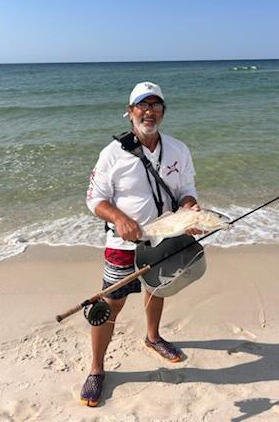
What was consistently observed was improved casting performance.A Gulf Coast Example
The hybrid system's practical value became particularly clear during a Spanish mackerel feeding event along the Gulf Coast.A large bait ball formed near the outer bar beyond ordinary casting range.Consistently reaching the feeding fish required approximately:
• 103 feet
• 104 feet
• 105 feet
of casting distance.
Shorter casts routinely fell short of the activity.The most productive presentations were rarely generated from poor geometry.Instead, the line was first:
• Reset
• Straightened
• Tensioned
• Aligned
before the final delivery sequence began.Using this approach, we landed a number of Spanish mackerel.The experience reinforced an important lesson:
Distance often begins before the sweep.Distance Is a Fishing Tool
Distance should not be viewed as a goal in itself.
Most fish are not caught at maximum range.However, additional casting capability often provides:
• Greater accuracy at ordinary fishing distances
• Improved performance in wind
• Better line control
• Access to fish feeding beyond normal reachOn many days, an 80-foot cast is sufficient. On other days, reaching fish may require 100 feet or more.The objective is not simply to cast farther. The objective is to reach fish when additional distance becomes necessary.The Evolution of a Principle
The Welsh Throw and Metropolitan Cast emerged from practical problems on tree-lined rivers where conventional backcasts were impossible.Modern surf environments present different challenges:
• Wind
• Surf currents
• Lateral tension
• Rapidly collapsing geometry
• Fish feeding at extended rangeThe tackle has changed.
The environment has changed.
The fisheries have changed.
The underlying principle has not.
Before a cast can be delivered efficiently, the line must first be positioned efficiently.Conclusion
The most valuable contribution of historical casting methods may not be the casts themselves.It may be the principles they teach.
The hybrid system combines:
• Historical line-setting concepts
• Progressive waterborne resets
• Modern delivery mechanics
• Contemporary tackleThe result is neither a strict historical reconstruction nor a purely conventional modern Spey cast.It is a practical fishing system that applies historical principles to modern conditions.In that sense, the evolution of the Metropolitan Cast does not end with history.It continues whenever an angler uses progressive resets to reclaim geometry, restore tension, and reach fish that would otherwise remain out of range.
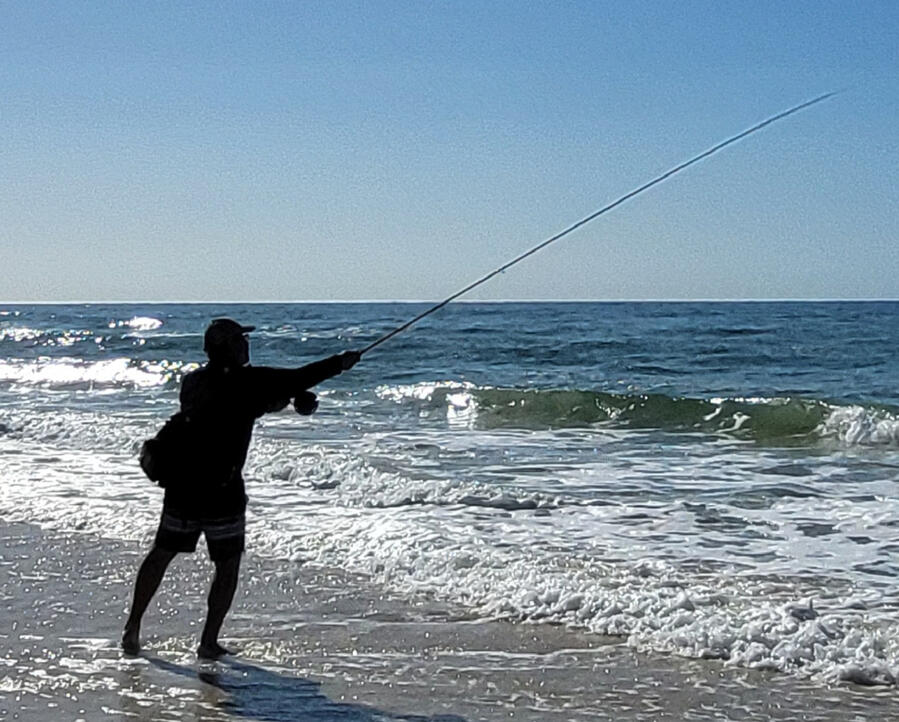
From Reset to CastHow Surf Spey Evolved from Progressive RepositioningIntroduction
Throughout this series, we have examined how the Welsh Throw and Metropolitan Cast used progressive line repositioning to solve casting problems long before modern two-handed casting systems existed.This article explores how those same principles apply to contemporary tackle, modern fisheries, and modern casting objectives.Surf Spey did not emerge to replace traditional Spey casting.
Instead, it evolved as an alternative way to quickly and efficiently acquire casting geometry before delivery.Although developed and refined in coastal environments, Surf Spey is not limited to beaches. The same principles can be applied on rivers, lakes, estuaries, reservoirs, and any body of water where the caster must restore geometry before making a presentation.What Surf Spey Is Not
Surf Spey is not intended to replace traditional Spey casts.
The:
• Single Spey
• Double Spey
• Snake Roll
• Snap-T
• Circle Spey
remain highly effective solutions to common fishing situations.
Surf Spey simply approaches the same problem from a different direction.Rather than selecting a specific directional-change cast for every line position, Surf Spey focuses on establishing the desired casting lane with one or two efficient resets, then delivering immediately.The objective is not replacement.
The objective is another practical option.The Common Foundation
The Metropolitan Cast and Surf Spey begin with the same assumption:
Before a cast can be delivered efficiently, the line must first be positioned efficiently.Poor geometry creates problems:
• Poor tracking
• Weak tension
• Misaligned anchors
• Inefficient D-loops
• Reduced casting performance
Both systems solve these problems by repositioning the line before delivery begins.The Metropolitan Approach
The Metropolitan Cast acquires the casting lane progressively.
• Lift
• Roll-Out
• Lift
• Roll-Out
•Desired Casting Lane Acquired
• Lift
• Sweep
• Forward CastEach rollout:
• Improves alignment
• Restores tension
• Reorients the casting lane
• Maintains water contact
The process continues until the desired casting lane is achieved.
Only then does the delivery cast begin.The Surf Spey Approach
Surf Spey pursues the same objective with fewer corrective movements.Depending on conditions, the reset may be:
• Waterborne
• Aerialized
• A combination of bothCommon sequences include:
• Lift and Roll
• Desired Casting Lane Acquired
• Immediate Lift
• Sweep
• D-Loop Formation
• Forward CastOr:
• Lift and Flip
• Desired Casting Lane Acquired
• Immediate Lift
• Sweep
• D-Loop Formation
• Forward CastOccasionally, a second reset may be beneficial:
• Lift and Roll
• Lift and Roll
• Desired Casting Lane Acquired
• Immediate Lift
• Sweep
• D-Loop Formation
• Forward CastThe reset may occur:
• Across the water
• Through an aerialized Lift and Roll
• Through an aerialized Lift and Flip
• Through a combination of aerialized and waterborne repositioningThe emphasis is not on the specific reset being used.The emphasis is on acquiring the desired casting lane efficiently and transitioning immediately into delivery.The Reset Is Not the Cast
One of the most important concepts in Surf Spey is understanding the reset's purpose.The reset is not intended to generate distance.
The reset is intended to create conditions that make distance possible.A successful reset produces:
• Alignment
• Tension
• Organization
• A usable casting lane
When those objectives have been achieved:
• Repositioning ends
• Delivery beginsCasting Lane Acquisition
A useful way to visualize Surf Spey is as a process of acquiring the desired casting lane.
• Poor Geometry
• Reset
• Improved Geometry
• Desired Casting Lane Acquired
• Sweep
• D-Loop
• Forward CastThe caster is not counting resets.
The caster is not performing resets for their own sake.The caster is simply placing the line where the next cast needs to occur.
Once the caster has acquired the desired lane, they can begin the delivery cast immediately.Why Surf Spey Developed
The Metropolitan Cast demonstrated that casting geometry can be corrected progressively through waterborne repositioning.Field experimentation suggested the same objective could often be achieved with fewer corrective movements.Rather than progressively acquiring the casting lane through multiple roll-out resets, the caster could frequently acquire the same lane through:
• One efficient reset
• Immediate tension restoration
• Immediate transition into deliveryDepending on conditions, the reset may be:
• Waterborne
• Aerialized
• A combination of both
The objective remains unchanged.
The line must first be positioned where the caster intends to cast.Once the desired casting lane has been acquired, repositioning ends and delivery begins.Some casters may still prefer the Metropolitan approach, particularly when conditions favor progressive correction rather than immediate delivery.Examples may include:
• Strong wind
• Complex currents
• Significant angle changes
• Situations requiring precise anchor management
• Situations where additional tension development is beneficial
In these cases, multiple resets may provide greater control and allow the caster to progressively organize the system before delivery.Surf Spey can therefore be viewed as an adaptation of the same positioning philosophy found in the Welsh Throw and Metropolitan Cast, with greater emphasis on rapid lane acquisition and immediate delivery when conditions permit.Not Just for Surf
Despite its name, Surf Spey is not restricted to beaches.The system can be used anywhere the caster must restore geometry before delivery:
• Surf
• Rivers
• Lakes
• Estuaries
• Reservoirs
• Obstacle-limited shorelinesThe environment changes.
The principle does not.
The line must first be placed where the caster intends to cast.The Evolution of a Principle
The Welsh Throw, Metropolitan Cast, and Surf Spey can be viewed as different expressions of the same underlying concept:
• Position the line
• Acquire the casting lane
• Deliver the castThe main difference is how each approach acquires the lane.
The Metropolitan Cast acquires the lane progressively through multiple waterborne corrections.Surf Spey attempts to acquire the same lane through one or two efficient resets followed immediately by delivery.Both systems solve the same problem.
They simply solve it at different speeds.Conclusion
Surf Spey should not be viewed as a rejection of traditional Spey casting or historical casting principles.Rather, it can be viewed as their continued evolution.
The objective remains unchanged:
• Acquire the casting lane
• Establish tension
• Deliver efficientlyWhether the reset occurs on the water, in the air, or through a combination of both is secondary to the objective.The line must first be positioned where the caster intends to cast.
Once the desired casting lane has been acquired, repositioning ends and the cast begins.That simple idea connects the Welsh Throw, the Metropolitan Cast, traditional Spey casts, and Surf Spey into a continuous progression of practical fly-casting development.Continue Reading
Surf Spey expands on the concepts presented here by exploring how casting-lane acquisition, aerialized resets, waterborne resets, and immediate delivery apply across a wide range of fishing environments, including surf, rivers, lakes, estuaries, and reservoirs.